Showing posts with label classic. Show all posts

Thursday, June 21, 2012

Classy Classics: The Witch of Blackbird Pond

That's right, it's time for another classic literature post.  Tonight's topic? The Witch of Blackbird Pond, a classic children's book.  I've loved this book since I first read it age 10. A chronic re-reader, I surpassed even my norm as a child by picking this book up 3-4 times a year until I was about 14. And, here's why you need to pick it up, too.

The Basics
Speare, Elizabeth George. The Witch of Blackbird Pond. Boston: Houghton Mifflin Harcourt, 1958. eBook.

Elizabeth George Speare was born 1908 and passed away in 1994.  She well known for her children's historical fiction and has won two Newbery Medals, on of which was awarded to The Witch of Blackbird Pond.

The Witch of Blackbird Pond follows the heroine, Kit Tyler, as she arrives in America from Barbados.  Following the death of her grandfather, she goes to live with her mother's sister in the Puritan colony of Wethersfield.  Her new life is a far cry from the freedom and luxury she enjoyed in Barbados. As Kit struggles to adapt, she also grows from an impulsive and rebellious girl into a confident and poised young woman.

Why You Should Read This Book!
I think the part of the book that first gripped me was the historic setting Speare uses. She places her story in Puritan American around the time of the Salem witch trials.  I loved history as a child, seeing it as one big story, so books that pulled from a historic background were always fascinating.  Speare does an excellent job capturing the feel of the period.  Readers can see the Puritan setting taking shape not just in front of them but around them, that's how immersive Speare's tale is.  The people Kit finds herself living with are as alien to modern readers as they are for Kit herself, which makes it incredibly easy to empathize and connect with Kit as a character.  This in turn further immerses the reader in the story, which is told in third person and focuses on Kit.

Speaking of Kit, the characters in the book are fantastically written. By the end of the novel, you'll feel as if you know them.  Kit, especially, feels like an old friend, since she is so easy to identify with.  Anyone who's every felt the least bit like an outcast will love her all the more.  She's bright, spunky, and incredibly out of place. But even the side characters are fascinating.  I was always partial to Kit's cousins, Judith and Mercy.  I'm not sure why I liked Judith so much a child, since she's clearly set up as a counterpoint to Kit. But, even when she's being snotty, you still have to like Judith who isn't ever really bad.  Mercy is sweet, and you'll find yourself quietly rooting for her as you read. Even the difficult characters are multi-faceted enough to find a likable trait. The only character who's truly detestable is the villainous Goodwife Cruff, as it should be.

Then we have Speare's fantastic story telling in general. From the start you'll find yourself invested in Kit's life and its outcomes.  You'll root for her as she defies prejudice and befriends the lonely old Quaker woman forced to live on the outskirts of town, bite your fingernails as she faces down accusations of witchcraft, and rejoice as she chooses a suitor and settles into a life of her own making. But ultimately, the story is not about any of those exciting events: it's about Kit, her daily life in Puritan New England and her journey toward womanhood.  It's warm and engaging and will keep you turning pages as quickly as you can.

Extras

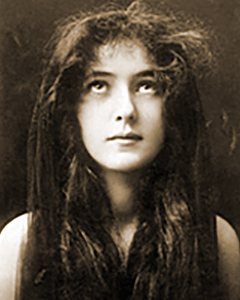
  • There's not really much to share, but you find a picture of the author on the right.
  • And below you'll find a collection of various book covers.


Thursday, February 16, 2012

Classy Classics: Anne of Green Gables

In my rebound from The Hunger Games, I picked up L.M. Montgomery's Anne of Green Gables and its sequels.  Like many girls who pick up these books, I loved Anne from the moment I met her.  And I love her still more now.   These are great reads for young girls and adults alike, so let me show you why you should pick up this classic series if you haven't already. (Yes, I know I tend to migrate toward girly classics, but I assure you I've got tons more with wider appeal to pull from my bag of tricks).

The Basics
Lucy Maud Montgomery was born on Prince Edward Island in Canada in 1874.  She began publishing short stories in 1897.  She first published Anne of Green Gables in 1908, but didn't complete all installments in the series until 1839.

Like Montgomery, Anne grows up on Prince Edward Island.  The series opens with Anne Shirley's adoption by Matthew and Marilla Cuthbert, an older brother and sister, who initially mean to take in a little boy to help with the farm work.  Anne quickly wins their hearts with her imagination and sweet nature.  The series follows Anne from the moment of her adoption into adulthood; along the way readers watch Anne grow into a young woman, get an education, find love, settle down, and become a mother. The books are, in order (though not order of publication), Anne of Green Gables, Anne of Avonlea, Anne of the Island, Anne of Windy Poplars, Anne's House of Dreams, Anne of Ingleside, Rainbow Valley, Rilla of Ingleside.

Why You Should Read These Books
I guess I can hardly avoid starting off with our titular heroine Anne.  Anne is unlike any other character. She's full of life and so vividly drawn I feel as if she must have been real.  As a young girl, I identified very much with Anne and her vibrant imagination full of fairies and a love of nature.  It also helped that she had an enormous (and hilarious) capacity for getting herself into "scrapes." Whether she's dying her hair green, falling from rooftops, or extolling the loveliness of a tree in bloom, Anne can't fail to warm your heart. (Unless, of course, you don't have one.  You do have one, right?). One of the best parts about the series when you're reading it as a young girl is that you can almost grow up alongside Anne.  And, when you revisit the books at a later date a new stage in Anne's life will have opened up to your further understanding, meaning that whatever your age, you can identify with the heroine.

You really can't beat L.M. Montgomery on her prose.  Her style is warm and engaging, at times hilarious and at others tear jerking depending on what a scene calls for. There's a certain genuineness to Montgomery's writing that engages readers' emotions as well as their interest.  I also really appreciate her versatility in tone.  Much of each book is dedicated to simple, everyday Canadian life around the turn of the century, and Montgomery imbues these scenes with a level of realism that pulls me in so much that I feel I might look up at any moment and be surrounded by Avonlea.  At the same time, Montgomery is capable of some of the most florid flights of fantasy, experienced most often when Anne freely indulges her powerful imagination.  Believe me, you'll never get bored.

A unique aspect of the books that I enjoy is that the plot of each novel is wholly focused on Anne's life stages and her passage through them.  There are many little plot threads that run throughout each book, but there isn't really a dramatic overarching plot line like you see with most (if not all) series today.  The books are truly character driven rather than plot driven in a way that is rare today where readers demand a defined story to follow.  I like the meandering snapshots we get of Anne's life; it's nice to read something just a little bit different and less modern.  As a result, the Anne books make for quick, light hearted reads that will nevertheless leave a lasting impression.

Extras

L.M. Montgomery

   Pin It

Thursday, January 12, 2012

Classy Classics: Austen Edition

So I know it was only fairly recently that I did a Classics post, but it was time for my semi-annual reread of Pride and Prejudice.  This book is easily one of the best loved pieces of English Literature, and if you haven't read it yet, that right there should be reason enough (of course, it's my favorite, too, which I'm sure will influence your decision properly).  I've long adored this book, and I think I like it better with each reading.

The Book
Austen, Jane. Pride and Prejudice. Oxford: Oxford UP, 2004. Print.

Pride and Prejudice focuses on the Bennet family, especially Miss Elizabeth Bennet.  The story follows Elizabeth along with her sisters as she navigates the society of the early 1800s in the British upper class.  The novel follows the main characters as they make the transition from girlhood to marriage; an all-important stage in the life of young woman at the time.  Along the way, Elizabeth must navigate the follies and foibles of her family, her acquaintances, and society as a whole.

Why You Should Read this Book
The characters, for one thing, are such that readers quickly become invested in their lives.  Some, like Elizabeth and Jane, you'll love and be eager to see how they grow and become well-married.  Others, like Lydia or Mr. Wickham, you'll be dying to see get their comeuppance. Austen crafts her characters with so much personality, that it's easy to get attached (even to the loathsome ones).  Elizabeth, for example is witty, clever, and good-natured, but Austen keeps her slightly flawed. All her intelligence is not enough to keep an unworthy from taking her in with the appearance of goodness. Nor does she entirely know herself: her encounters with Mr. Darcy over the course of the novel spur her to grow and become better and wiser and vice versa until they are a suitable match for one another.

I also love Austen's more ridiculous characters: Mrs. Bennet, Mr. Collins, and Lady Catherine de Bourgh.  There's really not much to say about Mrs. Bennet, since her character is so injudiciously obvious.  But, Mr. Collins and all his obsequiousness is delightfully squirm-worthy and laughable.  Naturally, he and his overly proud, "condescending" patroness, Lady Catherine go hand in hand.  As someone who delights in the ridiculous almost as much as Elizabeth, the novel provides ample opportunities for a laugh.

Austen's prose is also fantastic, as one would expect of a novel so beloved. She writes incredibly well, and it offers modern readers a glimpse of speech and writing patterns from the period.  At the same time, it is remarkably accessible writing that is easily understandable and engaging of interest once you get used to it. This makes it an ideal novel for a wide audience, even those who don't typically find classics readable (take that Charlotte Bronte). Her phrasing is by turns delightful, sweet, and subtly funny. It makes a great introduction to classics for any reader, though perhaps especially for young girls.

The story itself is a light romance.  You have your witty couple as well as your sweet couple, but with plenty of twists, turns and near misses to keep things interesting.  It's no wonder so many modern romances reference Austen's work. One thing I particularly liked about the edition I was reading from was that it was annotated. Granted some of the notes are perfectly useless (I mean, who can't figure out that amiable refers to someone's "friendly disposition" 313), but others clue readers in to little nuances of the period completely unknown to modern readers and that would otherwise be missed. Even for someone who's studied a good bit in both the long 18th century and Victorian literary periods (cough, cough), they're darned useful.

Seriously, why aren't you picking up this book already? (Go! Go now! *cracks whip*)

Extras
  • Let's talk movies!  The recent 2005 version of Pride and Prejudice, starring Kiera Knightly is quite good.  It's visually stunning, has a great cast, and features excellent scenes and costuming. It's true enough to the story, but the editing is a little rough and makes it hard to follow at times.
  • The 1995 BBC mini-series, starring Colin Firth and Jennifer Ehle is also amazing and highly recommended. It's incredibly true to the story, features a solid cast (Colin Firth!), and excellent costuming.  It's by far my favorite. (yes, I brought it home from the library again. What?).
  • The 1980 mini-series, also by the BBC, is atrocious.  Its casting is questionable and its script jumps all over the book. It would make an excellent piece to watch with friends and sarcastically comment on throughout, however.
  • There's also tons of other versions, including a 1940 one, which I plan to find soon.


Thursday, December 15, 2011

Classy Classics

In today's post, I'm doing something a little different than my usual book review.  Today, I'm posting on a book that's considered a classic. Naturally, such a title hardly requires a review; if it did it wouldn't be considered a classic in the first place (like, duh).  This classics post focuses on Louisa May Alcott's Little Women, which was one of my favorite books as a teen and remains so today.  I also associate the book with the holiday season, perhaps because the book begins at this time of year.  Regardless, this is my happy feels book I read almost annually (I really need to break down and buy a nice hardcopy; I've been through 3 paperbacks by now).

The Basics
Alcott, Louisa May. Little Women. New York: Signet Classic, 2004. Print.

Little Women follows the lives of the four March sisters: Meg, Jo, Beth, and Amy. The  girls are 16, 15, 13, and 12 respectively when the book opens, and readers shadow the girls through their teen years as they become young women.  Much of the story is based on Alcott's real life experiences with her own sisters, so it makes sense that the books seem to focus largely on Jo March (the character most closely resembling Alcott). However, the novel does often divert from Jo in order to tell the stories of the other sisters to the fullest.  The book is a heartwarmingly wholesome story for young girls that pulls readers delightfully into the 1860s American household in Concord, Massachusetts. 

Why You Should Read this Book (and/or force it on the nearest young adult)
One of the best features of the novel is its focus on overcoming struggles that life presents and bettering yourself along the way.  Though by no means poverty stricken, the March family has fallen on harder economic times after one of their father's investments goes south.  This puts the girls in the odd position of being in an upper class family without the means to reflect that status. They also face the hardship of being without their father, who has joined the Union army as a chaplain. This leaves the girls, along with the stalwart Ms. March, to run the household themselves. The March girls face these challenges as well as the challenges of their own individual personality flaws as they work to become the best "little women" possible (as patronizing as that phrase can sound, I think this novel means it more as the start to womanhood than anything else).  The books is full of little successes and joys as well as hard times and tragedies, making it a well-rounded, engagingly realistic read.

Little Women is almost entirely character driven. While it has little plot points that occur throughout the novel and a few larger (if more subtle) ones that unite the story as a whole, Little Women is primarily centered on the everyday lives of its heroines.  Meg, the eldest, is a sweet tempered, beautiful girl on the cusp of womanhood. Meg most remembers the March family's former wealth, and her desire to return to that former status combined with her vanity is her biggest struggle.  She must resist the trappings of a wealthy life that would only make her materially happy.  Jo is tomboyish and a little wild with aspirations to become a great writer and avoid becoming a young lady as long as possible. Over the course of the novel Jo works to overcome her more imprudent spontaneity and her hot temper.  Beth is the sweetest, kindest of the March girls, but she is also painfully shy and fearful of strangers.  Her challenge in life is to overcome her shyness enough to make friends and accept kind overtures.  She also faces her own sickly constitution, which she handles with a grace and infinite patience that inspires her sisters to better themselves.  Amy is slightly spoiled, very vain and proud, and somewhat inclined toward selfishness; however, she also has a sweet an loving nature. The first half of the novel sees Amy work to overcome the selfish parts of her nature and begin thinking more of others than of herself.  In the latter half, Amy gradually turns her vanity and pride into being a proper young lady. It's nearly impossible not to like and identify with Alcott's characters.

I also really enjoy the sense of the period that the book provides.  Readers are exposed to a charming  19th century New England that nevertheless maintains a sense of realism.  Through the girls, readers are exposed to ideas of dress, propriety, class and religion common to the era.  You also get a strong sense of womanhood in the period (albeit a specific class level), as well as common activities, socializing and the important role marriage played in a young girl's life.  Along with your enjoyable read, you also get a small slice of history if you're clever enough to notice it.

Extras